
South Fulton Directory Years
The Central Library Special Collections directory room is the main shelf for South Fulton city directory work. Its combined metro holdings reach from the nineteenth century through the recent Haines era. The books were organized for Atlanta, its suburbs, and Fulton County, not for a municipality called South Fulton. A search must therefore match the volume and heading to the address’s place name in that year.
| Collection | Years | Where Held | Access |
|---|---|---|---|
| Atlanta city directories | 1859/60-1991 | Central Library Special Collections | Walk-in, name and street listings |
| Atlanta suburban directories | 1953-1986 | Central Library | Walk-in, southwest suburban coverage |
| Haines criss-cross directories | 1946-2016/17 | Central Library | Walk-in, address and neighbor order |
| Georgia census microfilm | 1820-1880, 1900-1930 | Georgia Collection | Reading-room use |
Conventional publication ended in 1991, while reverse volumes continued into 2016-2017. Coverage is not proof that every rural household appeared. Some years and places are thinner than others. Ask staff at Library.SpecColl@fultoncountyga.gov before a long visit, especially when a search depends on one edition or an old community heading.
South Fulton’s Hidden Headings
Modern South Fulton incorporated in 2017. It never developed a long standalone run of printed books bearing its current name. Older households may be filed under Atlanta suburban, Fulton County, College Park, Red Oak, Sandtown, Cliftondale, Ben Hill, Campbellton, or another local label. Postal names and city limits also differ, so an Atlanta, Fairburn, or College Park mailing name does not settle jurisdiction.
This is the key geography issue in a South Fulton city directory search. Try the community name shown on an old deed, church program, school record, or postmark. For rural Campbellton-area land, begin with land lot, subdivision, deeds, plats, probate, churches, and cemeteries. Add suburban directories once the address enters their range.
Note: Absence from a printed volume can reflect rural delivery or a coverage boundary, not absence from Fulton County.
See South Fulton Directory Shelves
The library’s official holdings page shows the range and access point for these volumes. Review the city-directory collection before visiting.
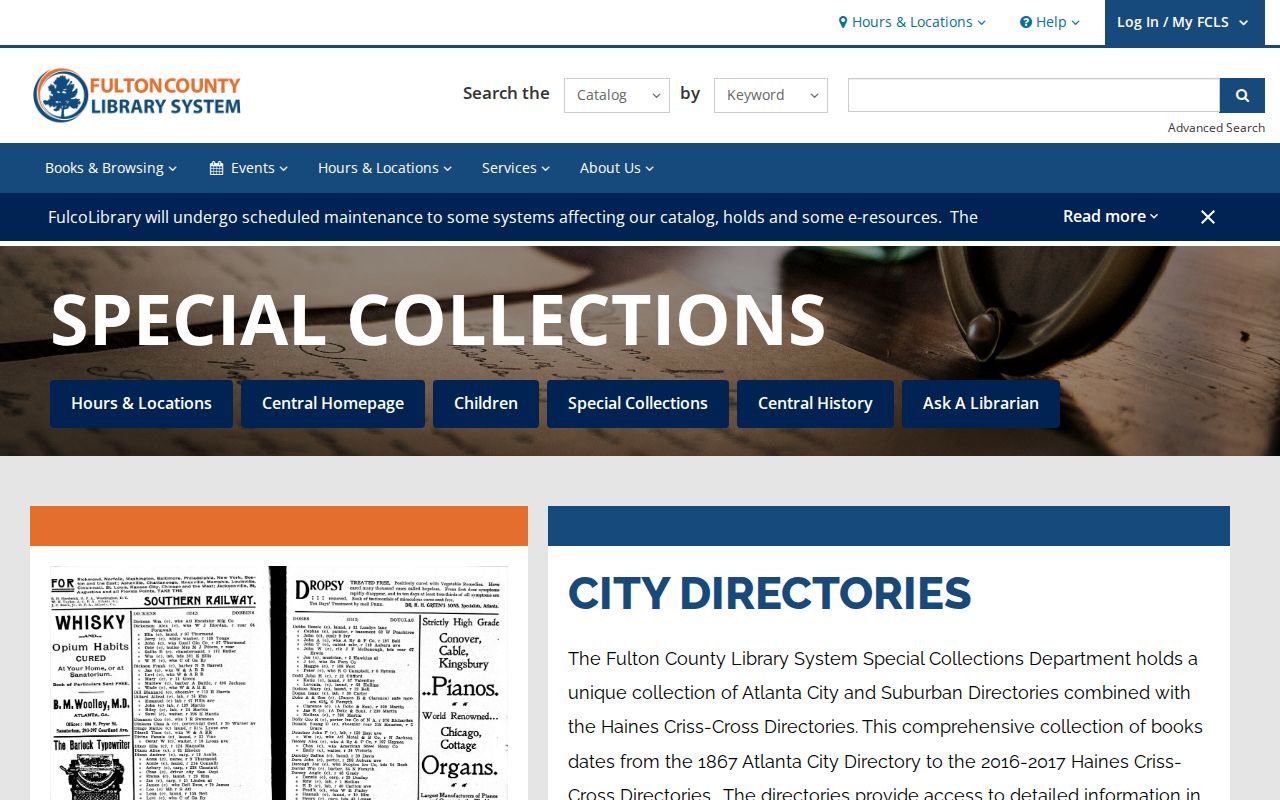
The page helps researchers choose between alphabetical city and suburban books and later Haines volumes. It also confirms that the physical collection, not a single South Fulton online index, is the authoritative access channel.
Digitized South Fulton Directory Leads
Some Atlanta city directories can be browsed in digitized repositories, although the repository is not the official library catalog. Search digitized Atlanta directory volumes, then verify the year and publisher against the Central Library holdings. Optical text search often misreads initials, abbreviations, and worn type, so browse the alphabetical pages when a name search fails.
The digital search is a useful first pass. The physical book remains important for its abbreviation key, street section, missing scans, and pages that automated text did not read.
Read a South Fulton Entry
A conventional city directory entry can compress a household into one line. Record the line exactly before interpreting it. A surname and initials may identify an adult, a spouse may appear in parentheses, and a widow notation can name a deceased spouse. Occupation and work address help separate two people with the same name. Children often do not appear as separate entries.
| Name | Surname, given name or initials, sometimes a spouse in parentheses |
|---|---|
| Work | Occupation, employer, or business address when supplied |
| Home | House number and street, often introduced by a short residence mark |
| Status | Householder, boarder, rooms, or widow notation, depending on the edition |
| Telephone | Often present in later reverse directories, but not for every household |
- Criss-cross directory
- A volume arranged by street and house number rather than surname.
- Householder index
- An index focused on the adult associated with a home, not every person there.
- Abbreviation key
- The edition’s own list of shortened words and symbols. Read it before decoding entries.
Never carry one publisher’s shorthand into another volume without checking. In many books, h signals home or householder, r residence or rooms, bds boards, and wid widow. Those are common patterns, not universal rules.
Reverse South Fulton Addresses
Haines criss-cross directories reverse the usual city directory method. Start with a street, move to the house number, and read the named occupant or telephone listing. Nearby numbers can rebuild part of the block. This is especially useful for the mid-century and late-century subdivisions covered by both suburban and Haines runs.
A Haines listing is evidence of a published association with the address, not a complete resident roster. Apartments may be incomplete. Unlisted phones and omitted households create gaps. Compare the result with census, deed, obituary, or other records before treating two similar names as the same person.
Work outward from the exact address. Copy the street spelling, house number, telephone number, and every name printed at that spot. Then read the nearby house numbers in order. A sudden jump can mark a road intersection, vacant land, a numbering break, or a part of the street outside the publisher's coverage. If the address vanishes in the next edition, search the person's name in the alphabetical volume before deciding the household moved. The publisher may have changed a street label or omitted a section during canvassing.
South Fulton Genealogy Companions
The Georgia Collection supplies newspapers, maps, local histories, microfilm, and vertical files that can explain a directory gap. Its census microfilm covers listed Georgia schedules from 1820 through 1880 and 1900 through 1930. Advance email is wise for maps and hard-copy files.
Fulton County Library genealogy databases add HeritageHub obituaries and the Social Security Death Index, Fold3 military records, MyHeritage, and in-library Ancestry Library Edition. These sources can identify relatives, funeral and cemetery details, military service, and earlier residences.
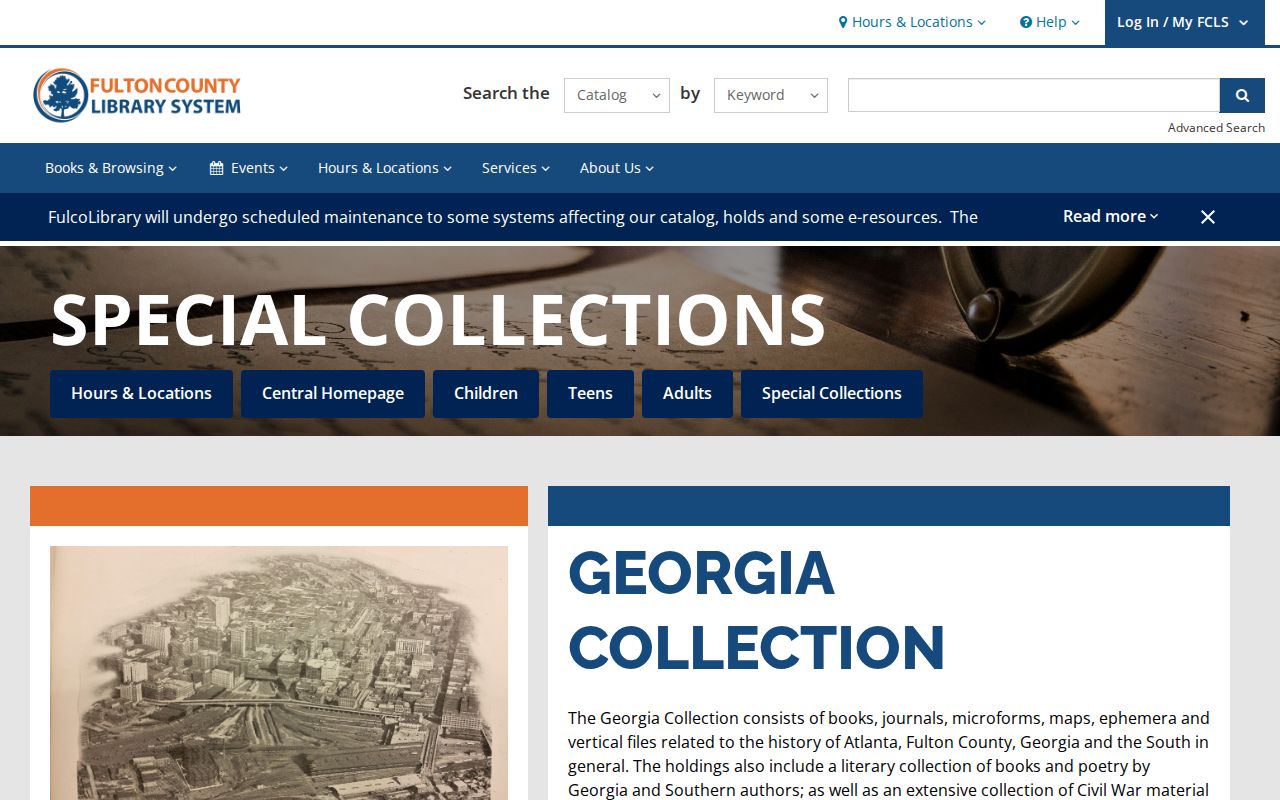
The collection view is a reminder to treat a directory line as a lead. Maps place the address, newspapers add events, and vertical files may preserve people or institutions missed by a broad database.
Auburn Avenue Research Library is especially relevant to South Fulton's largely Black population. Its African American manuscripts, oral histories, church, civic, and family collections can supply names that mainstream printed directories omitted or recorded inconsistently. Atlanta University Center archives and the Morehouse, Spelman, and Clark Atlanta collections may add alumni and institutional context, although public access varies. Search initials, married surnames, common misspellings, schools, churches, funeral programs, and historic communities. Use each item as evidence for the specific person rather than drawing conclusions from a surname alone.
Open the library genealogy database list to see which tools require an in-library session.
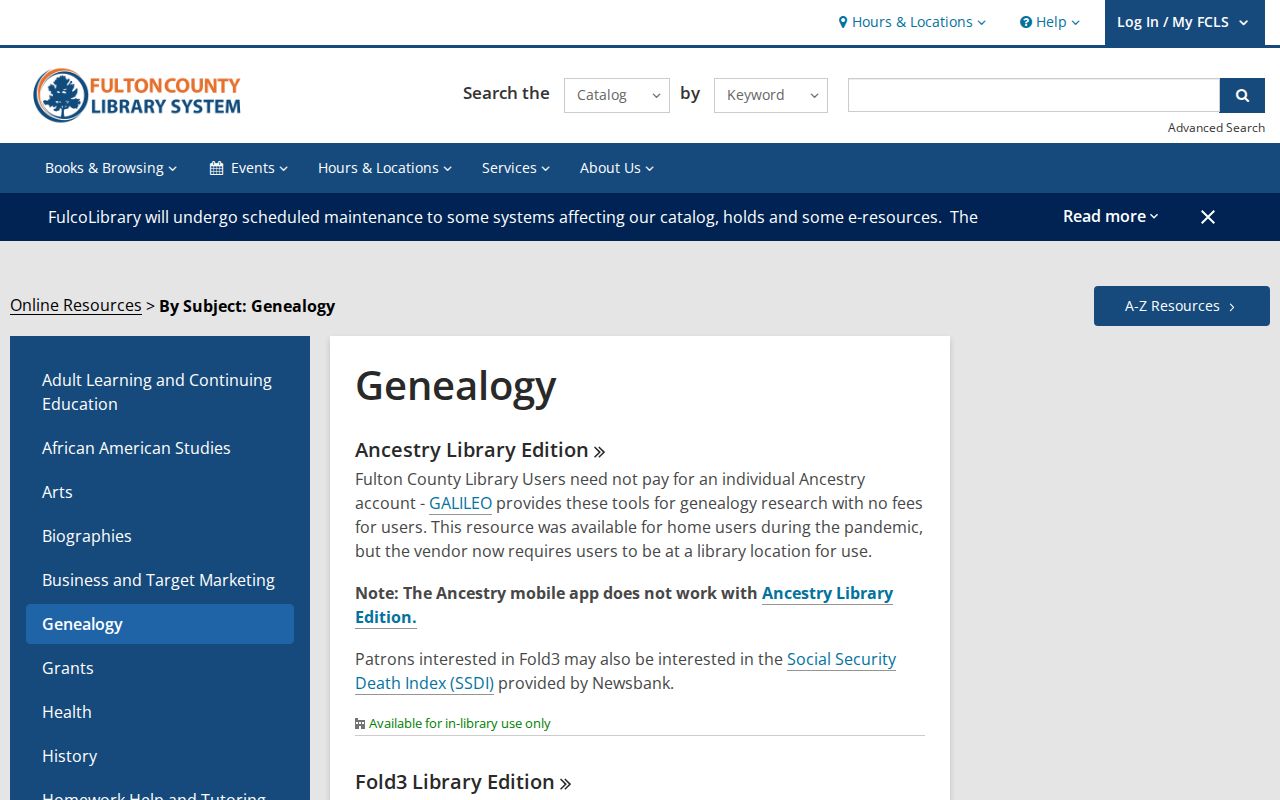
The access list separates remote resources from tools limited to library locations, which helps plan the research session.
Trace South Fulton Families
A South Fulton city directory trail works best as a year-by-year test. Begin with one known person and one likely year. Keep the spelling, spouse, occupation, employer, and full address from every entry. Adjacent editions can bracket an arrival, departure, marriage, move, or death more closely than a once-a-decade census.
- Find the person in an alphabetical volume and copy the whole entry.
- Check the editions before and after it, recording every address or work change.
- After 1946, search the address in Haines to identify a successor or nearby listings.
- Pair the 1940 and 1950 directory years with released census schedules from the National Archives.
- Use obituaries, probate, church, cemetery, and deed records to explain the end of the trail.
The census adds relationships, ages, and birthplaces, while annual books fill the years between schedules. A disappearance alone proves little. The household may have moved, changed its listing, fallen outside the publisher’s area, or become unlisted. For current address-keyed research, use the South Fulton street directory rather than extending a printed volume beyond its era.
Review the National Archives census route before pairing a federal schedule with an annual directory.
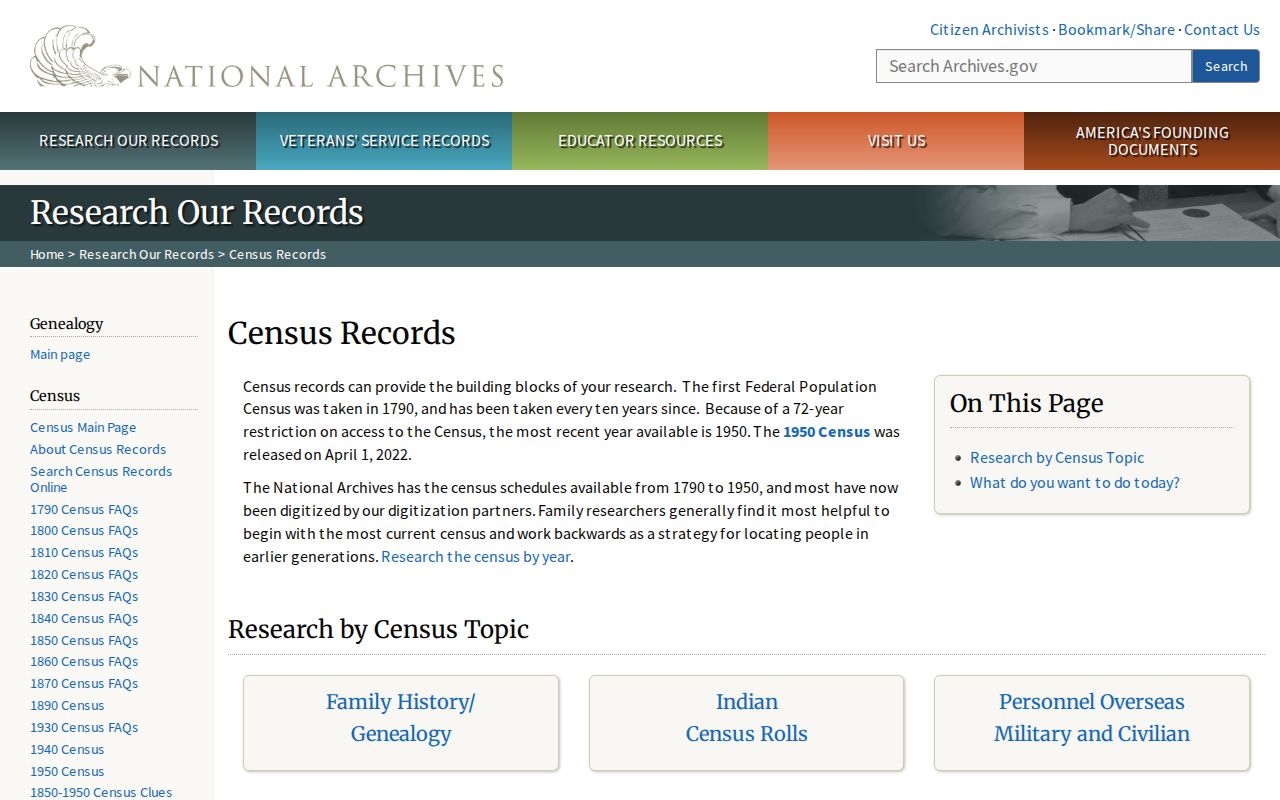
The federal guidance handles schedule access, while the directory supplies annual points between released census years.
South Fulton Directory Timeline
The local shelf follows the growth of metropolitan Atlanta and southwest Fulton rather than the life of the present city. That change in format explains which search key works best in each period.
| 1859/60 | Earliest listed Atlanta city-directory range in the library holdings. |
|---|---|
| 1946 | Haines reverse-directory coverage begins. |
| 1953 | Cataloged suburban directory range begins. |
| 1986 | Cataloged suburban run ends. |
| 1991 | Conventional city-directory publication ends. |
| 2016/17 | Latest Haines volumes in the collection. |
Printed alphabetical household books gave way to reverse directories and then digital parcel and telephone systems. South Fulton’s incorporation came after the printed era, which is why historic community headings remain essential.
The handoff between formats is unusually useful here. Conventional city directories end in 1991, while Haines continues through 2016/17, close to the city's incorporation. For later years, current parcel, voter, permit, and court systems become stronger tools. Earlier than Fulton County's 1853 creation, the same land may be indexed under predecessor counties or historic land districts. A complete South Fulton city directory search therefore changes both the record type and the geographic name as it moves back through time.
Keep a simple citation for every volume: title, publisher, year, page, address heading, and repository. That record makes it possible to return to the same entry and explain why two editions support a family conclusion.